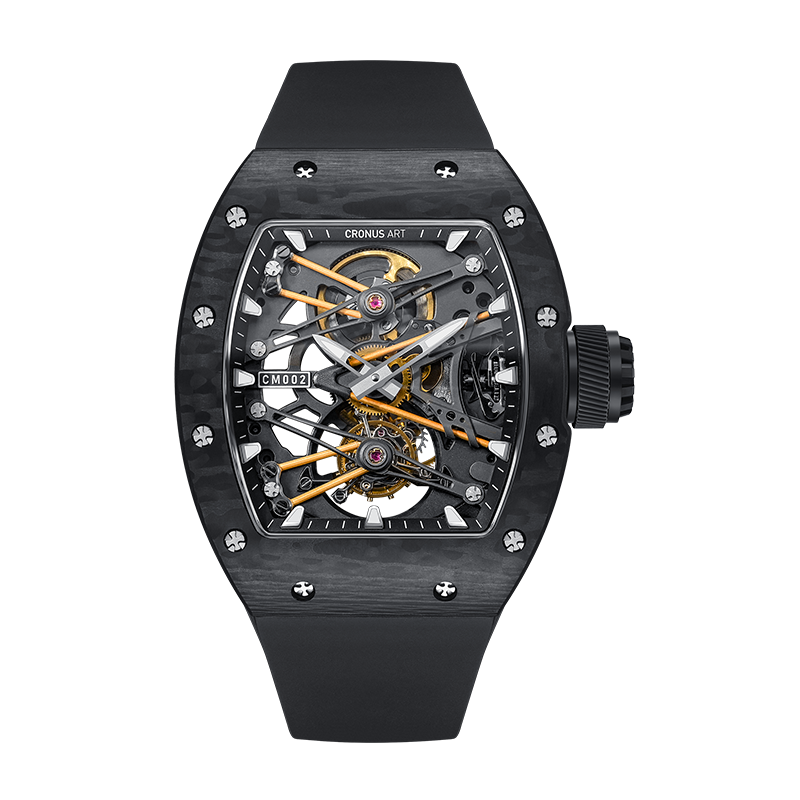
Few complications command as much respect as the tourbillon. Conceived more than two centuries ago, it was designed to solve a single, stubborn problem: gravity. In a pocket watch sitting upright all day, the pull of the earth subtly distorted the rate of the balance wheel. The tourbillon answered with elegance, placing the entire escapement inside a rotating cage that averages out positional errors as it turns.
How a Tourbillon Works
The balance wheel, hairspring, and escapement are mounted together in a lightweight cage that completes a full rotation, typically once per minute. By constantly changing the orientation of these components, errors caused by gravity in any one position are cancelled out over time. The result is a mechanism that is both a precision device and a mesmerising piece of kinetic art.
Why It Still Matters Today
Modern materials and shock resistance mean a tourbillon is no longer strictly necessary for accuracy. Yet it endures, because building one demands extraordinary skill. Assembling a cage that weighs less than a gram, perfectly balanced and reliable, separates the finest workshops from the rest.
- Engineering mastery — a true test of a watchmaker’s craft.
- Visual drama — an open dial reveals the cage in perpetual motion.
- Exclusivity — tourbillons are produced in limited numbers by hand.
At Cronusart Indonesia, the tourbillon sits at the heart of our most celebrated pieces — a statement of horological ambition for the collector who appreciates the extraordinary.